

+++ Advertisement: This post was created in cooperation with Sebastian Müller and Regionalmarkt.de. Thank you! +++
Eat regionally – You probably still remember my article about the delivery service. Regional market As previously reported, Regionalmarkt is an online marketplace for regionally sourced food from Munich and the surrounding area, offering exclusively high-quality products. As mentioned before, I naturally ordered some regional products to try and was immediately impressed.
Recently, after placing another order of fantastic regional products (…the carrot and nut bread was simply amazing…), I got back in touch with the friendly regional market team and managing director, Sebastian Müller. We got to chatting, and Sebastian told me briefly about his project of eating exclusively regional products for 30 days.
Since the desire for healthy eating – preferably with regional foods that also offer complete and high transparency regarding their ingredients – is steadily gaining in importance, I decided to share Sebastian's experiences with you. I was very interested in how Sebastian was doing and whether this was actually possible without having to significantly give up things that one enjoys on their plate. I met with Sebastian regularly and he kept me updated on how the "Try Regional" product was going.
 PREPARATION:
I figured eating exclusively regional food for 30 days couldn't be that difficult, and accordingly, I set myself strict conditions: everything I would eat over the next 30 days had to be grown, produced, and processed within a 100km radius of my current location. My only exception: coffee, without which I'd be hard to keep in a good mood.
The motivation behind it: I founded Regional Markt a year ago and, through my career as a competitive athlete, I've always had a strong connection to healthy and conscious eating. Nevertheless, I simply wanted to know what it's like not only to eat consciously and in a balanced way, but to take the extreme of completely forgoing imported goods and seeing to what extent, and above all, with what effort, this is even possible these days.
1 WEEK
Full of anticipation, I first visited conventional supermarkets to see what kind of regional products were available, but I was quickly disappointed. Even when it would have been possible to stock products from our region, depending on the season, some of them came from far-flung countries. When products labeled as regional were available, I was particularly struck by how poor the quality sometimes was. The local arugula lay wilted, shrink-wrapped in a plastic tray, while the bunches of produce from far away looked noticeably fresher.  Shouldn't short transport routes guarantee exceptional freshness? With packaged goods, it was also nearly impossible to verify whether even the final production step had been regional, while the other ingredients came from all over. In general, my own definition of regionality was completely incompatible with that of the supermarkets I visited. Even the "regional window," specifically introduced to identify regional products, often includes items from the entire region of Bavaria and Baden-Württemberg. A day later, at the organic supermarket, things weren't any better, contrary to my expectations. After a good hour, I left the market discouraged. My only purchase: pickled cucumbers.
I quickly realized that the planning effort was greater than initially assumed, and that if I didn't start planning, I would either have to go to bed with a rumbling stomach or live on scrambled eggs and potatoes for the next few weeks.
2nd WEEK
I've gotten quite used to it by now, I'm managing quite well with planning two days in advance, and I've identified enough products that bring a bit of variety to my diet. Especially with the seasonal increase in the selection of local salads and vegetables, it's easier for me to put a bit of variety on my plate.
 This also means that visiting weekly markets and farm shops requires a lot of time for shopping, time I simply don't have in my daily life. What really surprised me was discovering regional strawberries at the Viktualienmarkt this week. Whether that's truly necessary in March here in our region is, in my opinion, highly questionable from a sustainability perspective.
What I found difficult this week, however, was this: Whether it was the freshly baked cake brought in by a colleague, the jar of sweets on my desk, or the rice pudding at dinner – I felt like sweet temptations were lurking around every corner. I bravely fought off any afternoon slumps with natural yogurt, muesli, and honey.
And then, at the end of the second week, Easter was upon us back home, where I naturally had no idea where to find local produce. Thanks to my parents, whom I had warned two days in advance, I had a fantastic Easter, from poultry sausages and potatoes to homegrown rosemary, delicious veal schnitzel, and Rheingau white wine – a culinary delight even outside my usual surroundings.
 3rd / 4th week
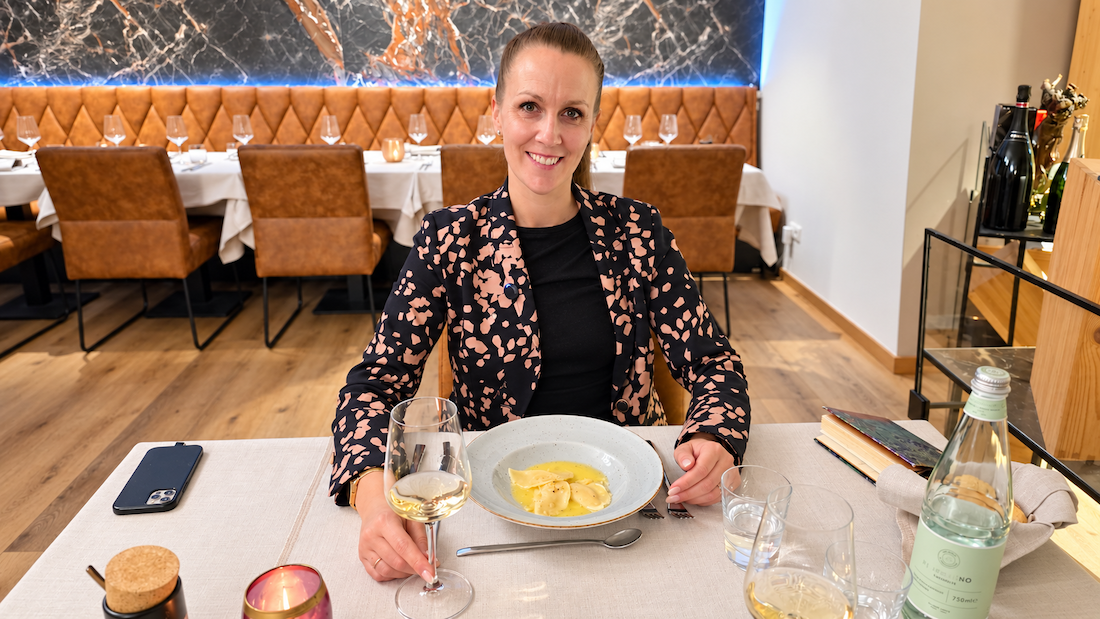
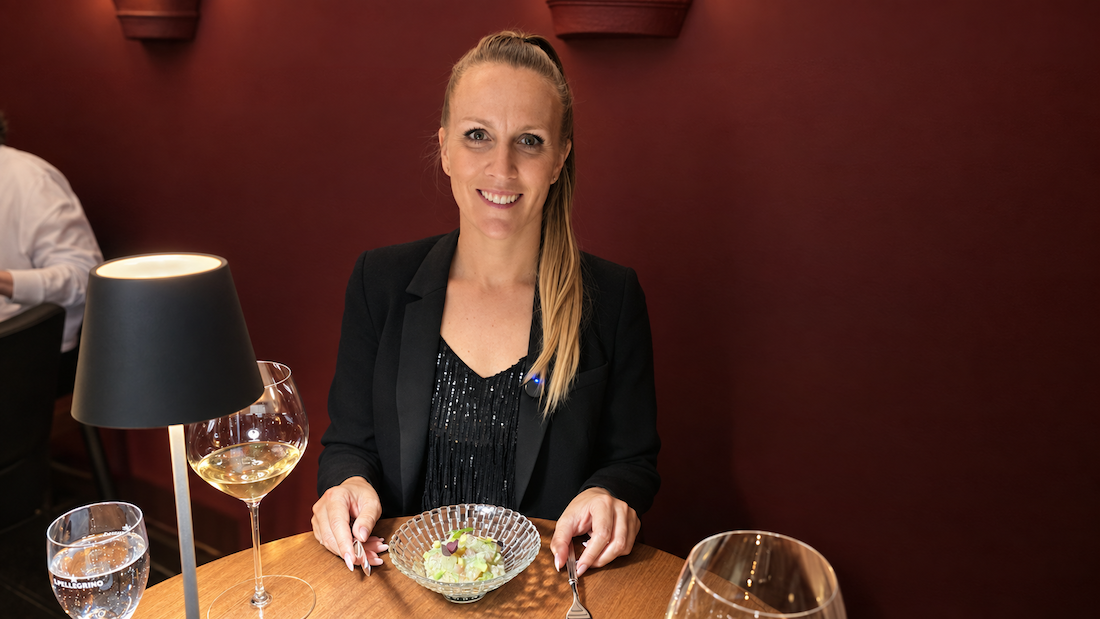
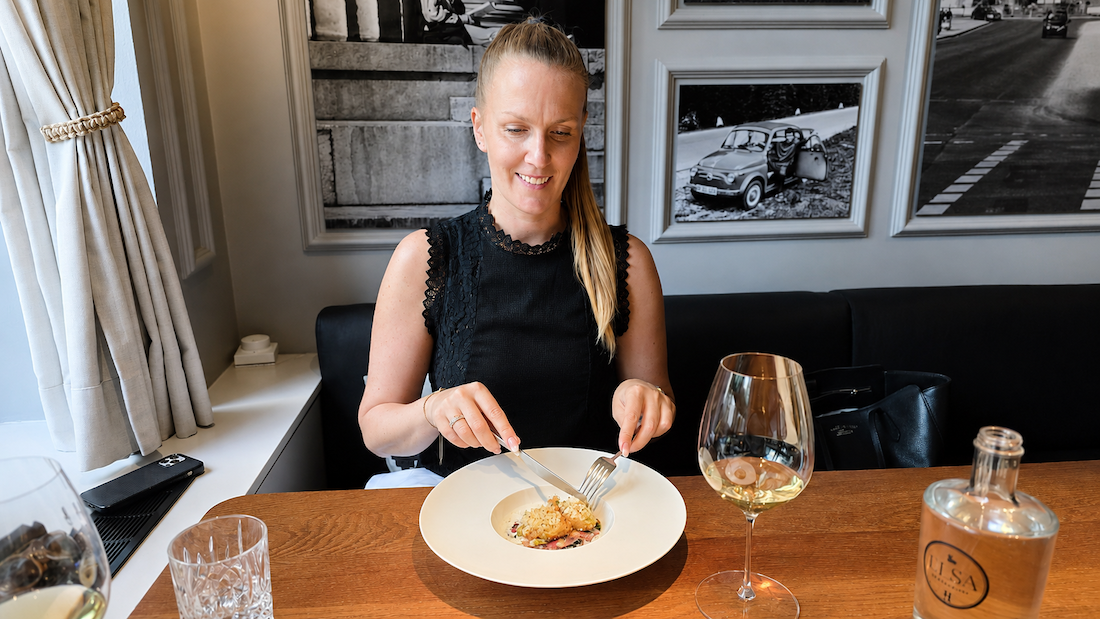
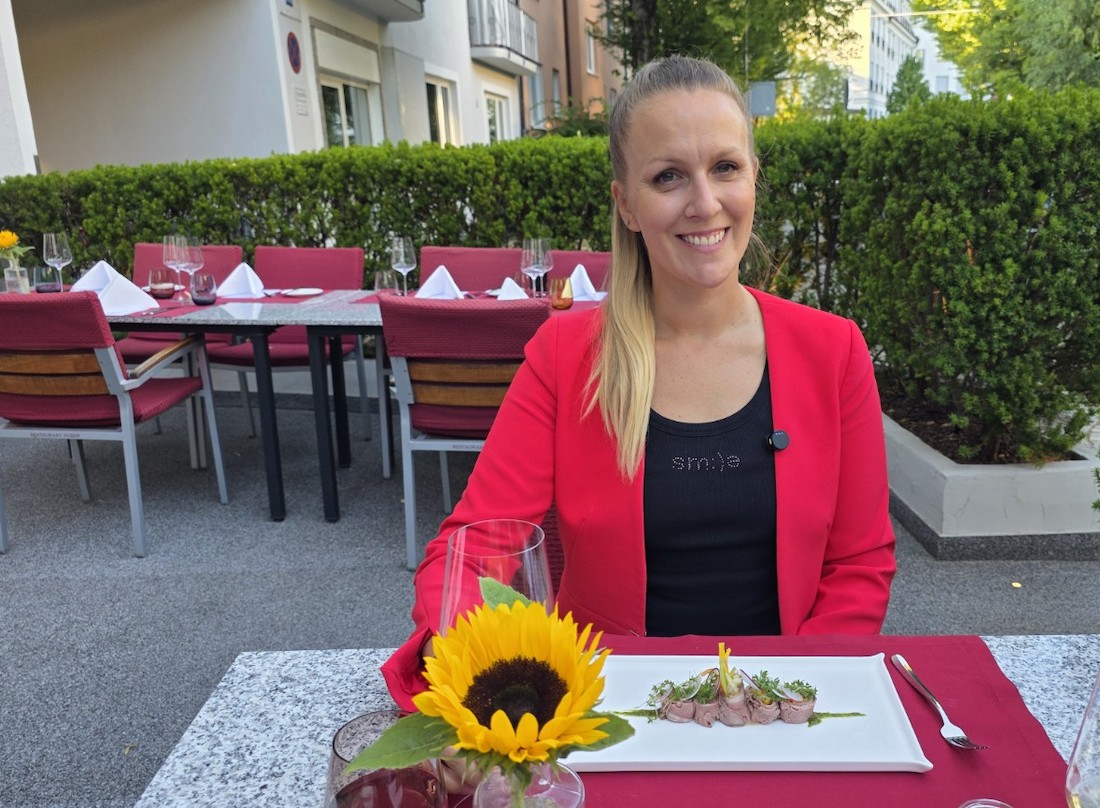
After spending the first few weeks figuring out where and what kind of regional products I could find, I've since focused more on how to integrate this way of eating into my daily work and life. So, I started by looking for restaurants that prepare dishes with regional ingredients, and with Lekkerei and Klinglwirt, I found two really good options for enjoying delicious regional food.

But I didn't just find restaurants. The more I look into it, the more opportunities I discover to eat and drink regionally, such as in... Cafe del fiore, where fresh milk directly from local farms is used for ice cream, milk frothing, and other dairy dishes. The only drawback of eating regional food from elsewhere: sometimes, as with currywurst at lunchtime, it might be a bit lacking in side dishes.
My friends and family quickly adapted, and instead of skepticism, I received understanding, helpful tips, and positive feedback. Even for my boyfriend's birthday party, where I feared I'd have to sit there hungry, the birthday boy had already contacted the Maxlrain Castle Brewery and arranged a regional birthday meal for me. So, for those four weeks, I was very well looked after by everyone around me.
CONCLUSION
Ultimately, I must also say that although I tried many things, the longer I conducted the self-experiment, the more I relied on our regional market products.  Even though I've found many regional products at markets and farm shops that also met my regional criteria, I simply don't have the time to dedicate so much effort to shopping. With Regional Markt, I have the opportunity to get products with the transparency and quality of a farm shop, but with a service that can be integrated into a normal, stressful workday.
I immediately felt like trying out this little "experiment" myself. How about you? Have you also had any experiences with regional products, or have you clearly identified their advantages? Thanks again to Sebastian from Regionalmarkt – the online marketplace for regional food.
Sebastian will certainly be available to answer your questions, provide suggestions and information about the products used (also available in the Regionalmarkt online shop). Why not take a look right away? here That's it, all the delicious things we have to celebrate the start of your project. 🙂
Which Medications Are The Most Essential For You




Leave a Reply