

[Advertisement]
Get to know (and understand) Vietnamese coffee! Have you ever tried Vietnamese coffee beans? Then you'd certainly consider yourself a connoisseur of good coffee, because Vietnamese coffee beans are not only visually stunning but also incredibly delicious. These are special coffee beans for discerning coffee drinkers, originating from this region and now exported all over the world. These coffee beans ripen under special conditions and can therefore come at a price. But in return, you get an authentic and unique flavor. If, like me, you're interested in Vietnamese coffee beans and want to learn more, the following information will be very interesting for you. Perhaps you'll even rave about these Vietnamese coffee beans to your friends afterward, or maybe you'll discover them for the first time and find yourself unable to live without them after buying them at the supermarket or perhaps ordering them online. So, let's get started!
How coffee is served in Vietnam
If you order a "Ca Phe" in Vietnam, you'll have to do a little bit yourself. In Vietnam, coffee is served as Ca Phe Sua in a glass with a metal filter on top, and hot water is added separately. Anyone who doesn't know this beforehand will certainly be quite surprised by what they're served. The coffee beans aren't simply thrown into a machine. You prepare the coffee yourself, using the traditional method. It might seem a bit unusual, but it's simple. The ground coffee sits on a sieve inside the glass. This sieve is called a phin. It's always prepared in batches. The filter is placed on top, and the hot water is poured in. Now you need to be patient, as the Ca Phe takes about five minutes to brew. You can find a wide selection of suitable coffee beans here. here.

Vietnamese coffee is diverse, varied, and completely different from what we know.
Various variations
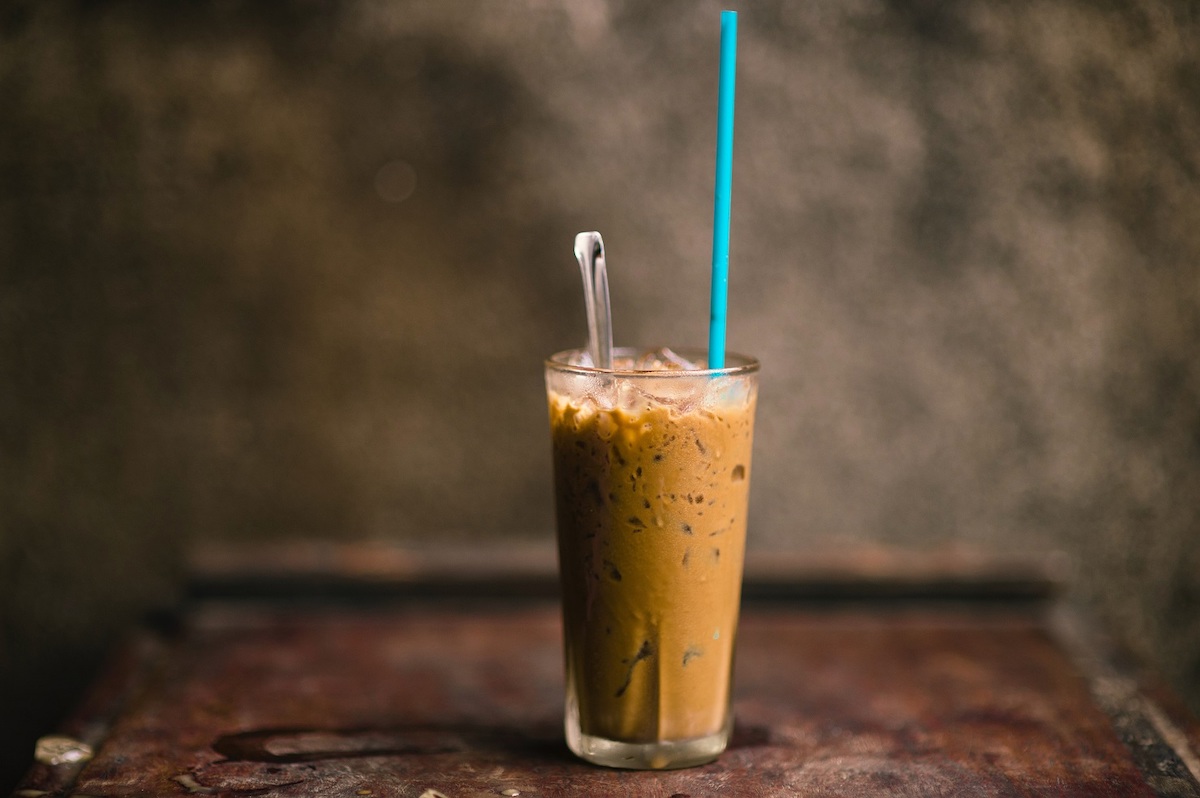
With a Vietnamese metal coffee filter using a phin (or similar filter), things are a little different. For a Ca Phe Sua, the filter contains a blend of ground Arabica and Rustica beans, usually in a 70:30 ratio. Vietnamese coffee is often enjoyed strong, so dark roasts are preferred – definitely something to know before trying Vietnamese coffee. Since the coffee itself is quite dark, it's practically an espresso. That's why tourists in Vietnam are often given a thermos of hot water to dilute their coffee. The Ca Phe Sua Da, on the other hand, is a variation best described as iced coffee. It's prepared using the same filter method but served with ice. Another specialty is the so-called Ca Phe Trung. This specialty isn't available everywhere, however, as it contains egg yolks whisked with sugar and then added to the coffee – this might seem a bit suspicious to some, but you should definitely try it!
A question of grind size
The choice or adjustment of the coffee grind is, of course, entirely up to you. When brewing with a Vietnamese filter, the bean blend is ground rather coarsely. This method prevents the release of too many bitter compounds during the brewing process. The coarser the grind, the stronger the coffee will be. As I've already explained, strong coffee is preferred in Vietnam, which, of course, isn't for everyone. If you're interested in learning more about the correct grind and brewing method, you can find further information here. Learn more now.
Coffee cultivation in Vietnam
Coffee has a long history in Vietnam. The country has relied on its beloved coffee beans for a very long time. For example, the year 1857 is recorded, as that was the year the French brought coffee to the country. It didn't take long for production to become established in Vietnam. Large plantations were established, and the rest is history. However, Vietnam hasn't been considered a coffee nation since 1857. This reputation took a little longer to develop, around 1910. Incidentally, the Buon Ma Thuot region in the central highlands is considered the "capital" of Vietnamese coffee. So, if you ever come across coffee beans or ground coffee from this region, you're one of countless coffee connoisseurs and drinkers of coffee from this popular area.
Conclusion
Now you've learned quite a bit about coffee in and from Vietnam and are able to articulate and define what makes Vietnamese coffee beans and coffee preparation so special. It's the way the coffee is served, for example, and the fact that it's brewed particularly strong. Some specialties, like the aforementioned variations with ice or egg yolk, are certainly worth trying – whether everyone likes them is another matter. The country's history is also inextricably linked to coffee, as it has been a very important commodity and economic asset in this Asian nation for over 100 years. So, the next time you see Vietnamese coffee beans in the supermarket, why not choose some? What's wrong with trying something new? If you've already booked your trip to Vietnam but don't want to miss out on coffee during your vacation, then you can look forward to new flavors and coffee experiences. Try out the different varieties, sample Vietnamese coffee beans, or simply taste the local coffee yourself!
+++ This article was created in cooperation with the Coffee Buddy GmbH. Thank you! +++




Leave a Reply